Cromatología de la Materia Enferma
Es.
Cromatología de la Materia Enferma es una serie de producciones (algunas individuales y otras en colaboración) que transitan las cohesiones materiales y teóricas de cuerpos humanos y no-humanos (tecnológicos, bacterianos, animales y vegetales) a través de cuatro producciones en videoarte referentes a cuatro colores (verde, amarillo, gris y negro) centradas en la enfermedad. Cada producción audiovisual está ligada a una producción textual de ficción y, en algunos casos, un ensayo teórico académico. Cromatología de la Materia Enferma es una serie abierta a continuar indefinidamente.
En.
"Cromatology of the sick matter" is a series of productions (some individual, others collaborative) that explore the material and theoretical cohesions between human and non-human bodies (technological, bacterial, animal, and plant-based) through four video art pieces corresponding to four colors (green, yellow, gray, and black) centered on the theme of illness. Each audiovisual production is linked to a fictional textual piece and, in some cases, an academic theoretical essay. "Cromatology of the sick matter" is an open-ended series intended to continue indefinitely.
Verde [Open Disc Wormhole] (2025)
Ciberqueer – Tecnomaterialismo - Sujeto Digital – Viralidad – Cuerpo
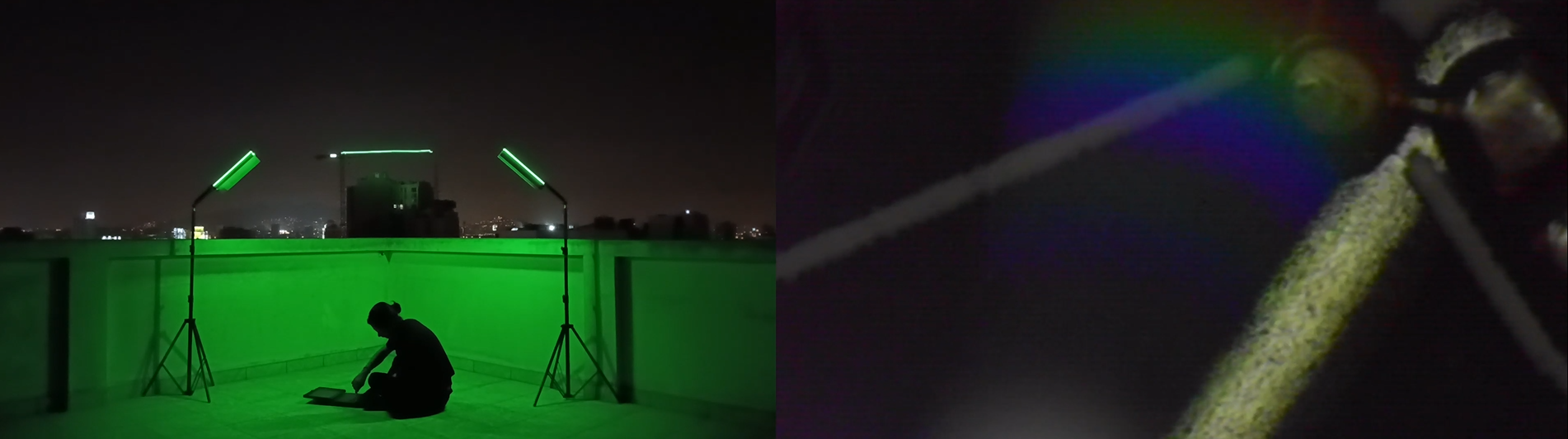
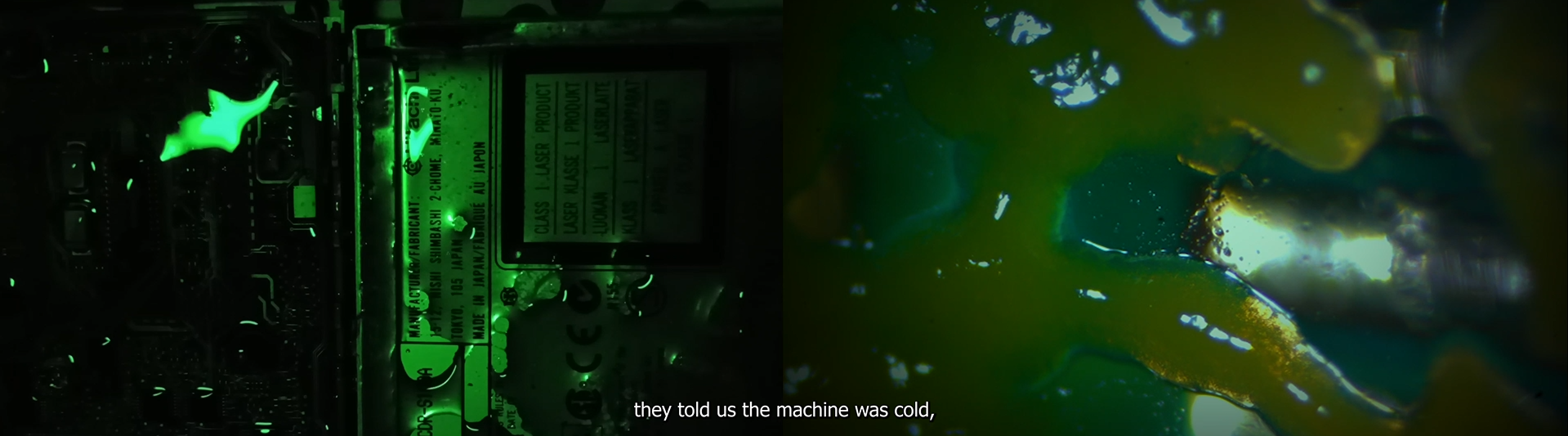
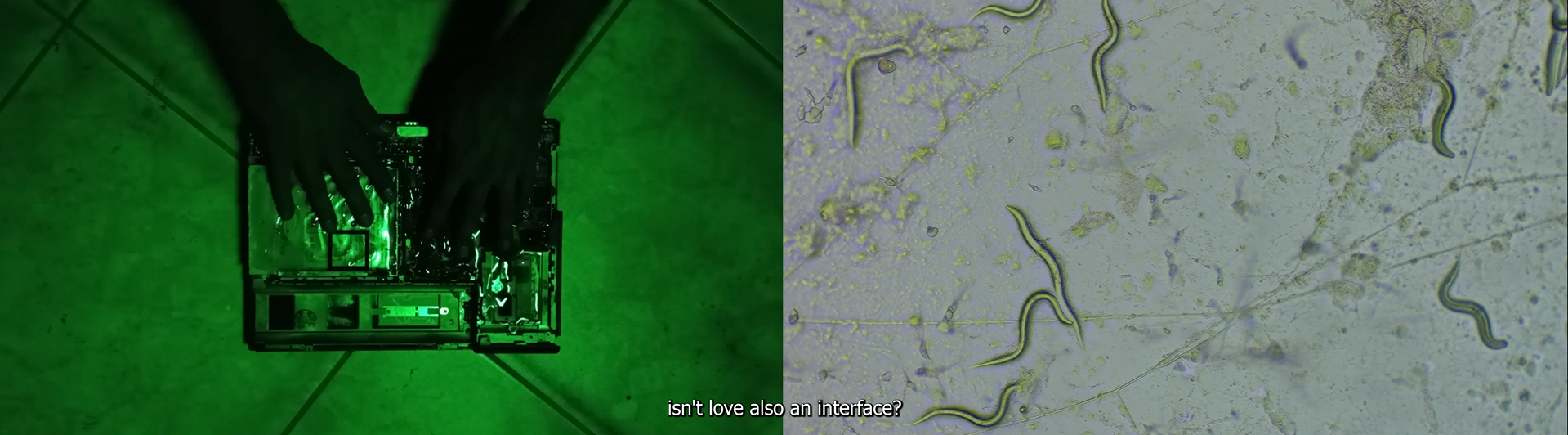
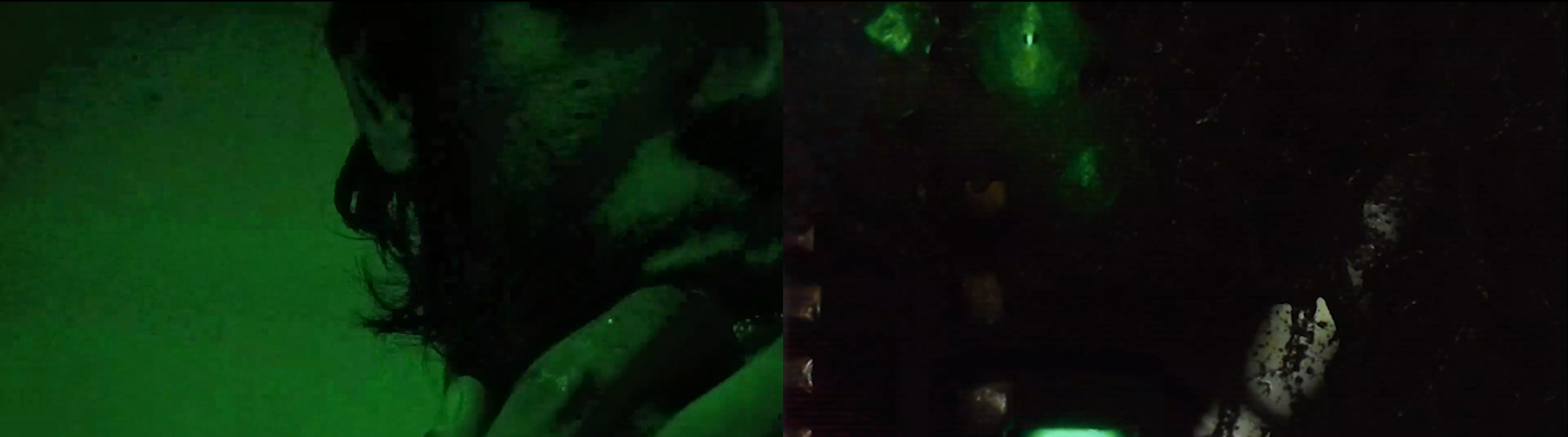
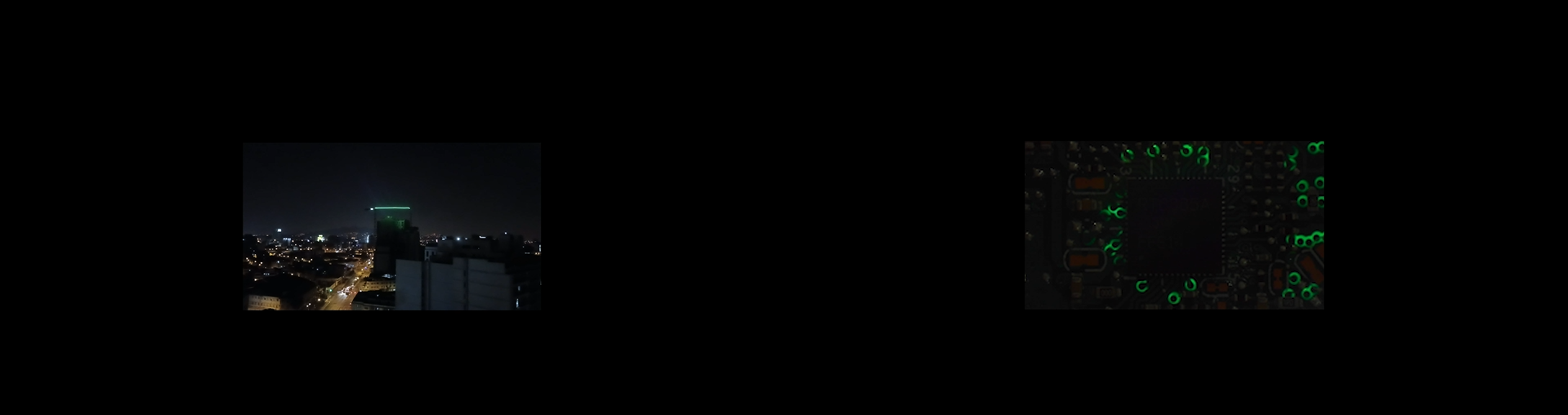
El videoarte “Verde [Open Disc Wormhole]” (Bienal L’andArt 2025) examina la encarnación digital queer desde un marco tecno-materialista, rechazando la noción de una esfera digital inmaterial. En su lugar, propone que la materialidad misma de la tecnología —desde servidores hasta placas madre— es el sitio donde se disputa la identidad. La obra sintetiza dos perspectivas teóricas clave: la agencia política del hackeo consciente, ilustrada por Legacy Russell, y la ontología del sujeto digital como un “enmarañamiento” de datos y corporalidad, descrita por Olga Goriunova. Esta tensión se corporiza mediante metáforas virales y necrobiopolíticas (Preciado, Bersani), representadas en el video a través de un acto performático de contaminación viscosa —con miel y moho— sobre hardware abierto. Bajo una luz verde de putrefacción y control, la obra disuelve los límites entre lo orgánico y lo digital, lo humano y la máquina, proponiendo que la libertad queer reside no en la red, sino en el circuito de retroalimentación corrosivo y erótico generado al hackear sus materialidades. La identidad así emerge no como esencia, sino como mutación en la interfaz.
En.
The video art piece “Open Disc Wormhole” (L’andArt Biennale 2023) examines queer digital embodiment through a techno-materialist framework, rejecting the notion of an immaterial digital sphere. Instead, it posits that the very materiality of technology—from servers to motherboards—is the site where identity is contested. The work synthesizes two key theoretical perspectives: the political agency of conscious hacking, as illustrated by Legacy Russell, and the ontology of the digital subject as a “tangle” of data and corporeality, described by Olga Goriunova. This tension is embodied through viral and necrobiopolitical metaphors (Preciado, Bersani), represented in the video through a performative act of viscous contamination—using honey and slime mold—on exposed hardware. Under a green light that evokes both decay and control, the piece dissolves the boundaries between the organic and the digital, the human and the machine, proposing that queer freedom resides not in the network itself, but in the corrosive and erotic feedback loop generated by hacking its materialities. Identity thus emerges not as an essence, but as a mutation at the interface.